Season One: 7 Mile Beach Review
The anticipation to play 7 Mile Beach had been simmering for years. Like waiting for a new HBO prestige series that teases with glimpses of drama and cliffhangers, but never confirms the premiere date. Some people have been waiting nearly a decade. Matty Goggin has been waiting his entire life. My own anticipation began in 2020 when I was approached to help with the branding. Suddenly, it felt like stepping onto a carefully lit set, each dune and fairway waiting for its scene.
Goggin is the producer, the Hobart native with a vision too big to be contained. The director is Mike DeVries, who loves getting his hands dirty on set, framing every shot and shaping the action. Beside him is co-creator Mike Clayton, acting as the seasoned show runner. While DeVries manages the technical production, Clayton focuses on the narrative arc, ensuring the pacing is right and that every scene flows logically into the next. Lukas Michel, the script supervisor, working within the margins to ensure continuity, subtly nudging the production back on course whenever the plot threatens to drift.
Episode One opens like a slow tracking shot over a quiet dune. The fairway introduces the cast and characters but saves its best action for the final reveal. The green unfolds like a secret location revealed at the climax of a scene. Elegant, refined, and deceptive in its simplicity. You only notice the subtleties after stepping off, the contours and movements whispering, the ball rolling with a life of its own. It is a green that sets the tone, a promise that the story will reward those paying attention.
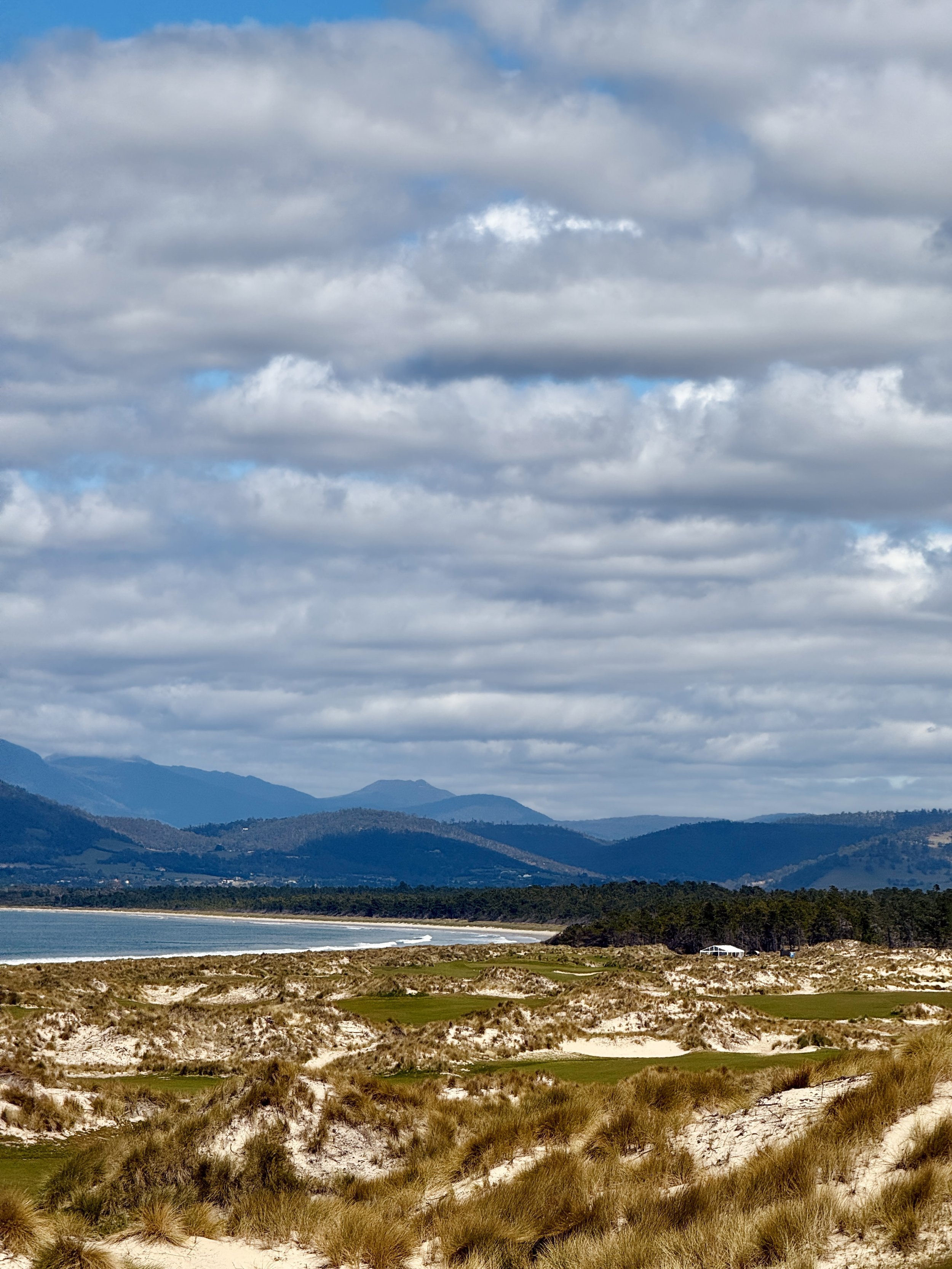
Episode Two is a par 3, a tight and dramatic bottle episode with a panoramic reveal. The green sits high and halfway up a dune overlooking Tiger Head Bay. The wind tugs at your clothing, smells of salt and grass drift together, and the horizon stretches like the opening credits of a sprawling saga. You sense the vastness of the course in that single view, the world that you’re embarking on and the drama of the season waiting to unfold across every hole.
Episodes Three and Four toss in plot twists that feel designed by writers who enjoy toying with their audience. Episode Five is a marketing dream. The poster shot. The still frame that sells the whole series. Then the run from Eight to Fourteen begins and the show stops caring about your emotions. It simply hits its stride and gushes creativity. These holes feel alive. They feel like the late night binge watch when you promise yourself you will stop at one more episode before bed but then find yourself three episodes deeper and fully hypnotised.
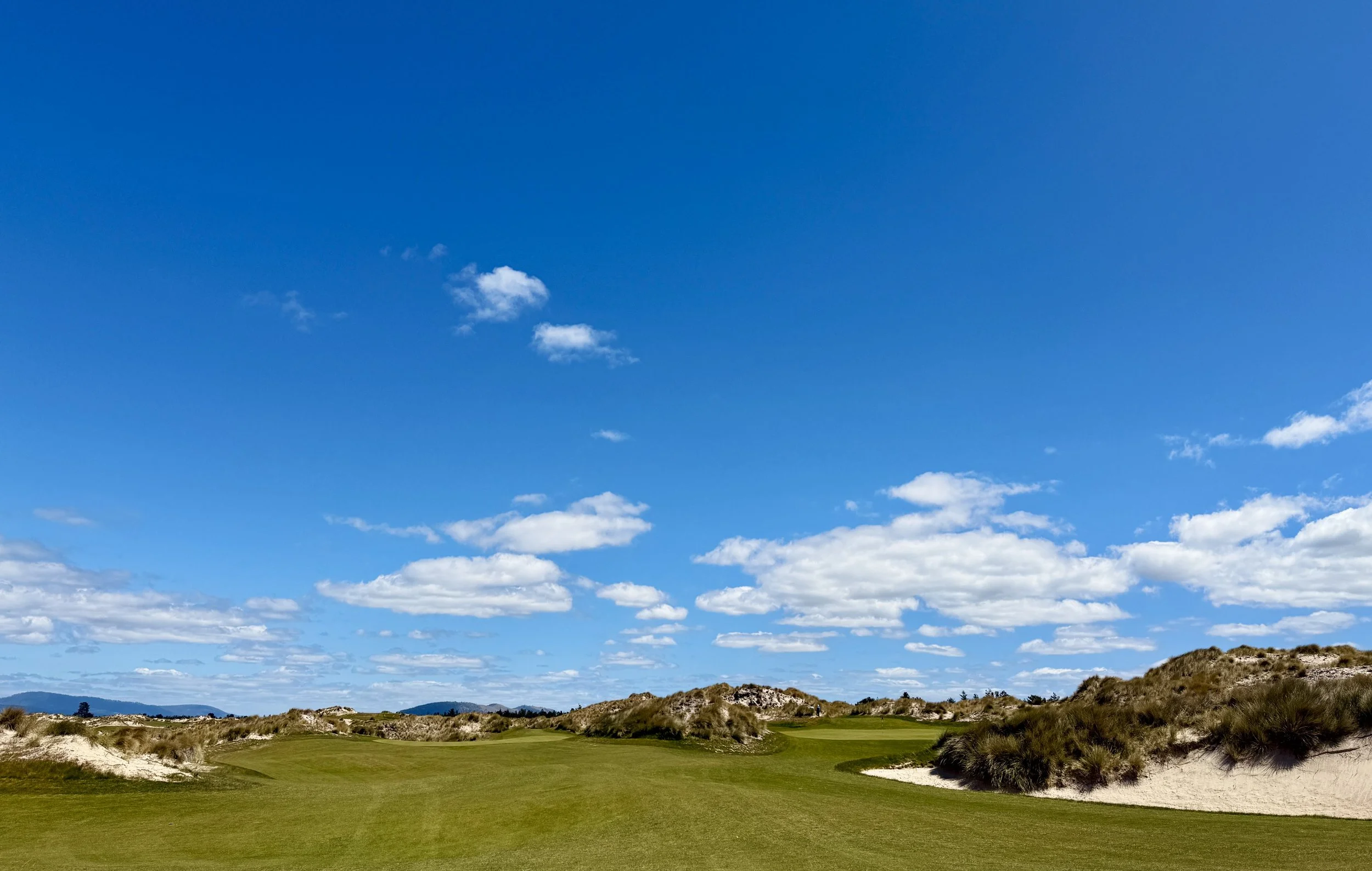
The Double Header Monster 8th
The middle stretch from Episodes Eight through to Fourteen is pure cinema. Twists and turns, subtle tricks, moments that feel like the true realisation of the 7 Mile Experience. A hypnotic montage of brilliant and surprising moments. The fairways roll, sand brushes against shoes, the ball teeters unpredictably. Gusts of wind whip across the dunes, carrying the scent of wildflowers and salt, each hole a minor drama building toward a crescendo. Episode Thirteen is my personal favorite. A sequence so unique it could exist nowhere else. The kind of episode that leaves you breathless, the ball a tiny actor in a grand production.
The finale, Episode Eighteen, is cinematic in every sense. A long par 5 that feels like the closing act of a season finale. A giant central bunker sits ahead like a prophecy carved into sand. It looks fatal. It looks final. You think the scene will claim a beloved character, a last-minute heartbreak. Then the illusion breaks. There is still 150 yards of story left to play. The bunker is a teasing interlude, the green a wild and jagged stage, nothing like the elegant opening of the first hole. Sunlight catches the slopes, wind rustles the dunes, and every step, every putt feels like a final shot in a beautifully directed scene. Some players will embrace the chaos. Others will drift into their own fan fiction, imagining the practice green perched higher on the dune as the true finale. Great prestige television teaches us that endings provoke debate, and 7 Mile Beach delivers with confidence, leaving you with the want of replaying the television series again and again.
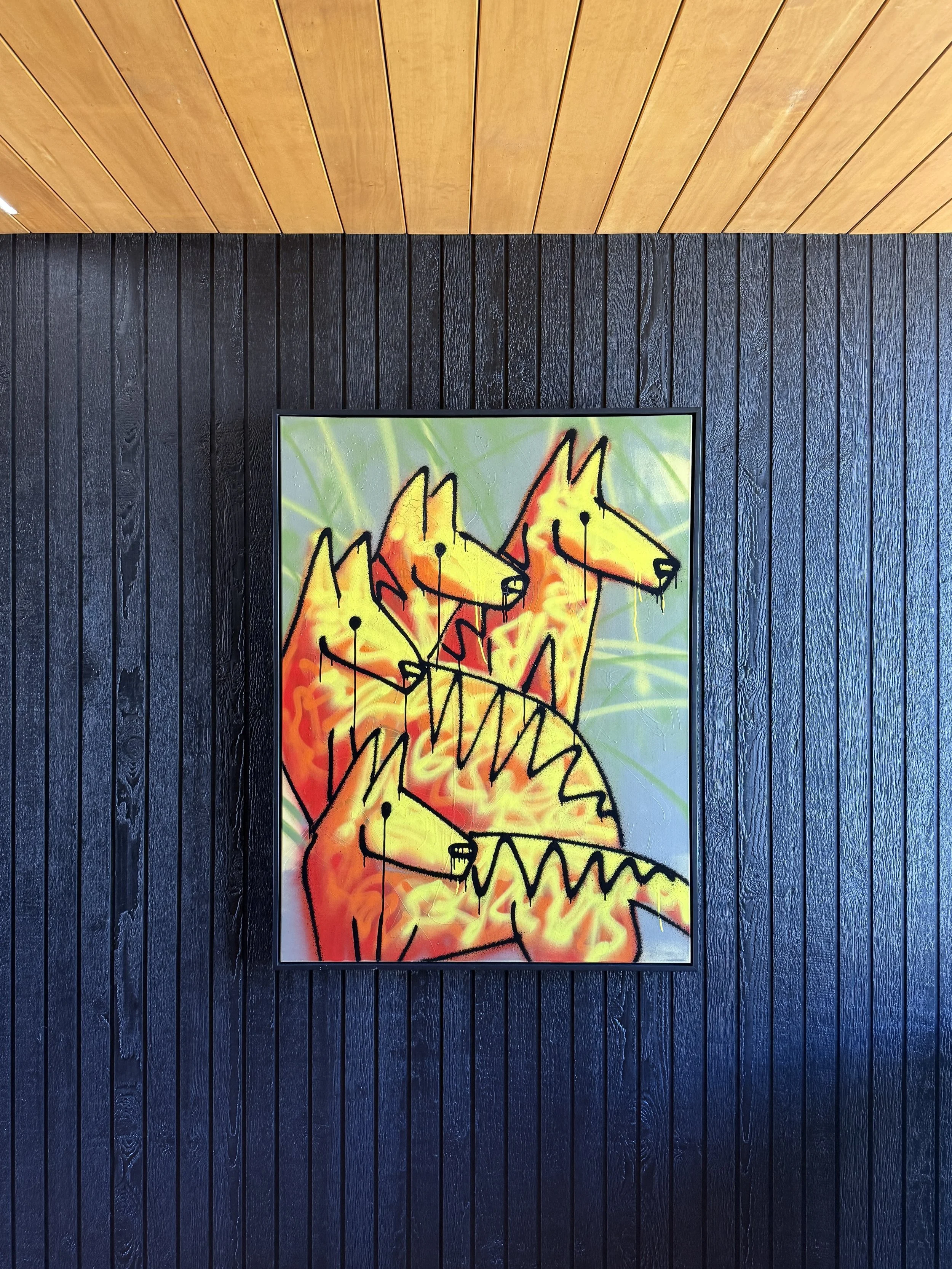
The tasteful artwork placed within the halfway house/shelter, wonderfully showcases local talent and compliments the art that exists over the 18 holes of golf. A nice touch.
What lifts the entire production into something distinctly Australian is the world surrounding the course. The halfway house refuses clichés. No gaudy images of fairways plastered on walls. Instead, walls are adorned with genuine Australian art. The smell of freshly baked meat pies fills the air, local pastries and produce reminding you that this is home. The merchandise celebrates Australian makers and identity. No imported gloss, no awkward imitation of overseas luxury. The entire experience feels grounded, authentic, and distinctly Australian.
The best scene of the day, however, was unscripted. As we left for Hobart, a handful of schoolgirls hopped out of a car with clubs over their shoulders, ready for a twilight round. The future of junior golf in Tasmania glimmered at that moment. Young Australians taking ownership of a space built for them, a quiet but compelling post-credit scene hinting at what the next season could hold.
Season One of 7 Mile Beach is a triumph. A uniquely Australian story told with ambition, courage, and flair. DeVries delivers a compelling narrative with tension and character. Goggin has willed a dream into existence. Australia now has a new series to celebrate. Something grand. Something alive. Something with enough cliffhangers, twists, and cinematic moments to keep you hooked until the next season arrives.
Happy Golfing