Architectural intuition
A common courtesy, or perhaps a common punishment, of being a professional in 2026 is being asked how Artificial Intelligence might improve your job.
That opening sentence sounds like it belongs beneath a headshot on LinkedIn, probably next to the words disruption, workflow and unlocking potential. But the question keeps appearing, and in golf course architecture, it is genuinely interesting. So, against everyone’s better judgement, including my own, it seems worth exploring.
If we were to imagine a blank canvas, land surveyed, boundaries defined, contours mapped, and the site sitting there waiting to become a golf course, the immediate temptation is to ask AI to design it. Feed the machine the data, press the button, and wait for eighteen holes to appear like some strange architectural microwave meal.
But I don’t think that is where its value lies.
The value, at least today, is not in replacing architectural intuition. It is in informing it.
AI could become a way of gathering, sorting and testing the layers that already influence good design. The architect still needs to decide what matters, what to ignore, what to exaggerate, and what to ruin beautifully with a bulldozer. But AI may help us see the site more clearly before we start pretending we saw it all along.
Prevailing Winds
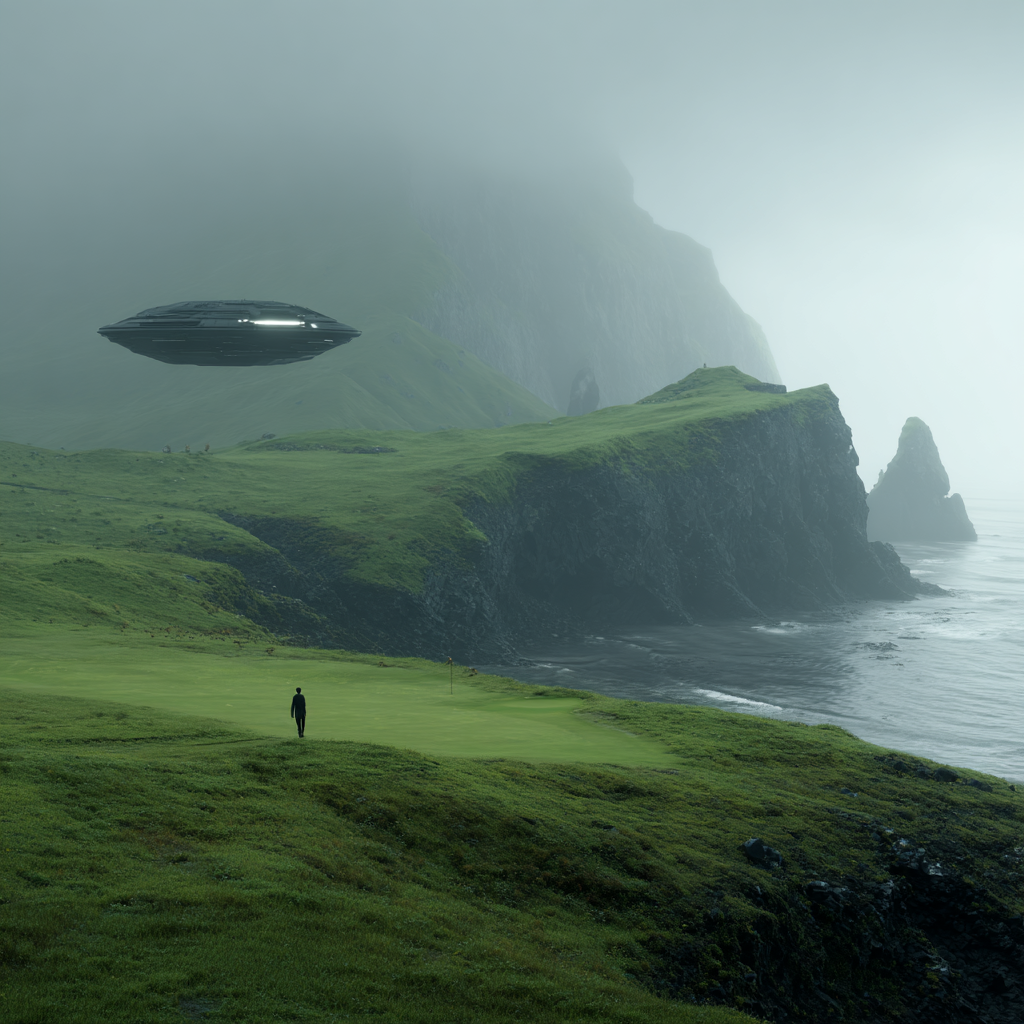
Most parts of the world have recorded wind data. In theory, AI could help translate that information into something useful during routing.
Not simply “the wind comes from the south-west”, but how often, how strongly, and at what times of year. That could influence hole direction, length, par, and the balance of the round.
The goal would be to avoid designing a course where the golfer spends four hours slugging shots into the wind like they are trapped on some horror golfing treadmill, questioning their hobbies and possibly their marriage.
Hydrology
Water is one of the great, unglamorous foundations of golf architecture.
It determines where turf survives, where foot traffic gathers, where machinery can move, where greens should sit, and where the land quietly says, “please don’t build that here.”
Much of this is still understood by walking the site, watching it, feeling it underfoot, and seeing what happens after rain. But AI could help layer hydrology data over the property in a way that gives the architect a clearer early understanding of the site’s behaviour.
It could help identify natural green sites, sensible tee locations, drainage corridors, wet areas, dry ridges, and the places where intervention might be necessary. Not to remove feel from the process, but to support it.
Demographic
Golfers are not all the same, which is an obvious statement that somehow still needs repeating.
If a club understands who is actually playing the course, how far they hit it, how widely they disperse it, and where they struggle, AI could help shape a more intelligent design response.
This does not mean building a course by spreadsheet. That sounds horrible. But it may help determine how many teeing areas are really needed, where they should go, and whether variety is more valuable than simply stretching the course backwards until everyone is miserable.
A better understanding of golfers could lead to better shared experiences. The same bunker, the same water hazard, the same angle of attack, but encountered differently by different players.
That is where design becomes interesting.
Scale
Scale is one of the great hidden ingredients of golf architecture.
The length of holes, the size of greens, the width of fairways, the scale of bunkers, the climb of the land, the rhythm of par, the feeling of moving through space. All of it matters.
AI could help set broad tolerances. Minimum and maximum hole lengths. Green sizes. Bunker scales. Tee locations. Walking distances. Elevation changes. The distribution of par across the round.
The more generous the tolerance, the more likely we are to find variety. The tighter the tolerance, the more likely the golf course begins to feel like it was extruded from a municipal sausage machine.
They say variety is the spice of life. Personally, I like a golf course with a kick.
Iteration
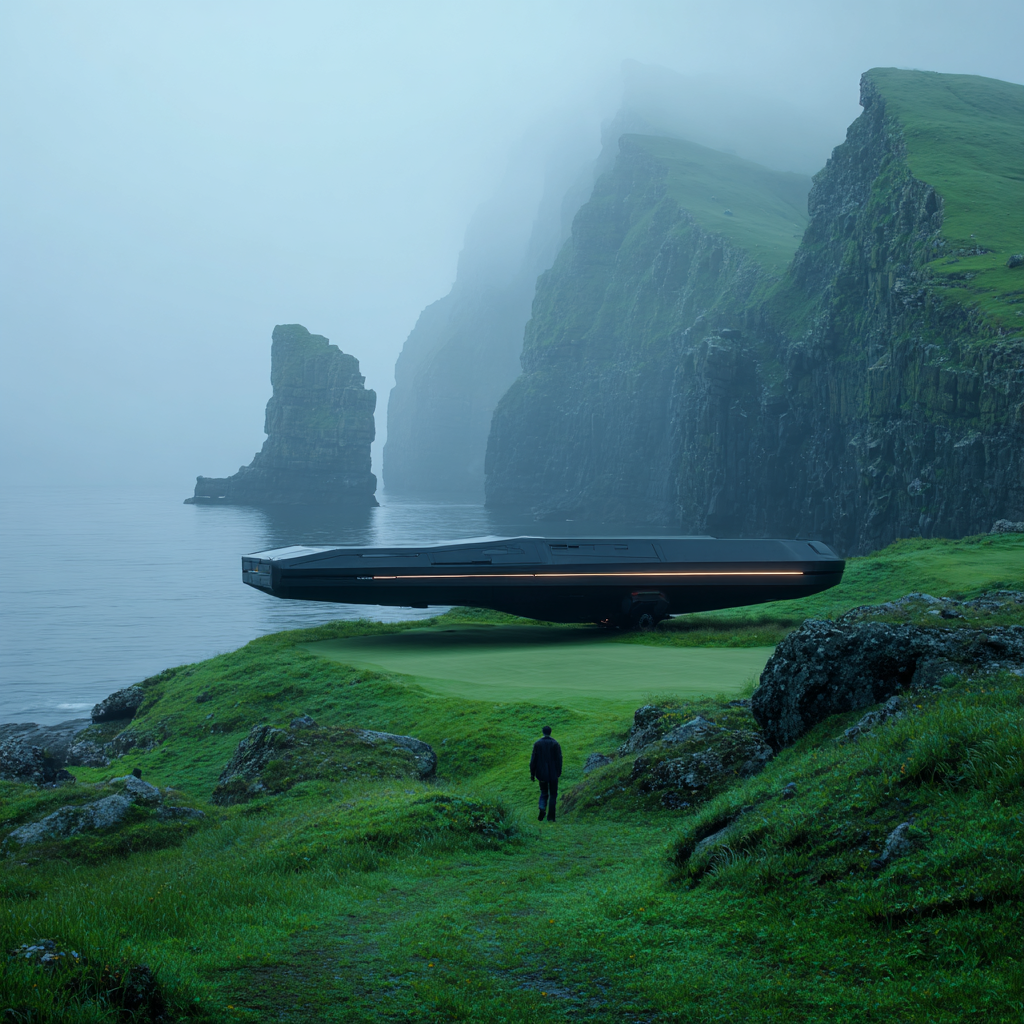
One of the first principles taught in architecture school is the value of iteration.
Do it again. Try it another way. Turn it upside down. Make the bad version. Find the mistake that becomes the idea.
Golf architecture has always had this. Many clubhouses have a framed routing plan on the wall, usually admired by golf nerds who stare at it with the emotional intensity of people reading a lost religious text.
“What could have been.”
“The missing holes.”
“The alternate seventh.”
AI could make this process faster. Not better by default, but faster. It could produce routing options in seconds, allowing the architect to compare different approaches, red-line them, combine them, reject them, and begin designing from a more informed position.
The danger, of course, is mistaking speed for quality. A quick answer is not necessarily a good one. It is just quicker at being wrong.
But as a tool for iteration, AI could be genuinely powerful.
The Human Part
I am still a novice in how I use AI, and AI is still a novice in golf course architecture, although probably learning at a more alarming rate than I am.
But even today, much of what I have described feels possible. With the right data, the right prompts, and a patient enough operator, AI could already help test winds, hydrology, demographics, scale and routing options.
At the moment, getting there might take a couple of days of careful prompting, failed attempts, strange outputs, and the occasional result that makes you wonder if the machine has ever seen a golf course, or grass.
In a few years, that same process may take seconds.
I am in favour of that.
Not because I want AI to design golf courses, but because I want more time to break the rules of the plans it produces. More time to walk the site. More time to stand on a green pad and decide it should move three metres left. More time to shape the land, test the idea, and find the little moments that no dataset can quite understand.
Golf architecture has always lived somewhere between information and instinct.
AI may improve the information.
The instinct still has to come from somewhere else.