
The Whole Carcas
The smell of diesel cuts through the frozen spring air. A dozer idles somewhere behind me, its engine coughing quietly in the cold, and the ground beneath our boots is only just beginning to soften after a long winter. The machines leave not so faint tracks in the damp soil and I’ve lost feeling of my extremities. They will not be felt until I return back home to Australia.
This is not a grand reconstruction. These projects will not set the internet on fire. There are no dramatic unveilings or launch videos being edited somewhere. Just existing golf courses getting a bit of attention before the season properly begins.
Just a small construction zone on an existing golf course. A bunker in need of restoration. A fairway grade that never quite worked. A green edge that can finally accommodate a dubious pin location. It’s small work. Patchwork work. And when you stand inside a little piece of land like this, your mind naturally shrinks down to the details. Not the whole golf course. Just the ground in front of you.
How much can we get out of this small moment? How resourceful can we be with what is here? It is a surprisingly useful exercise and work I really enjoy doing.
The off season back home leaves a lot of room for observation. The world of golf architecture tends to keep moving while you are not looking. Destination golf continues to surge forward and the old Field of Dreams logic of “build it and they will come” keeps pushing projects further and further toward the edges of the earth. Remote peninsulas. Clifftops and Hidden Valley’s
The landscapes are spectacular and the architecture placed upon them is often very good. Some of the finest minimalist architects working today are shaping those places with real care and restraint. The photographs are breathtaking. And most of these courses will open to immediate discussion about where they belong among the best in the world.
But after staring at enough of those images a small question begins to linger. What exactly are we celebrating? Many of these new places feel like a sequence of individual golf holes interacting with a spectacular landscape. A green sitting against the ocean. A tee perched above a cliff. A fairway weaving through dunes that look as though they have existed forever. Each hole becomes its own moment between golf and scenery. Individually they can be extraordinary. But taken together something about it can feel slightly indulgent. The land is so dramatic that the architecture becomes a series of beautiful placements rather than a complete act of use. The landscape becomes the ingredient rather than the whole animal.
There is nothing inherently wrong with that approach. The results can be breathtaking. But it is not quite the flavour of golf architecture that resonates most strongly with me. The courses that stay with me tend to operate differently. They feel devoted to golf.
Alwoodley in Leeds is a good example. Once you cross the road and step into that broad paddock of land the entire place feels as though it exists purely for the game. The land is not presenting a handful of dramatic stages. It is simply being used.
Kingston Heath works in much the same way. Its beauty lies in small reveals and glimpses of other holes through the trees. Golf that has just happened. Golf that is about to happen. The entire property feels like a continuous conversation with the game.
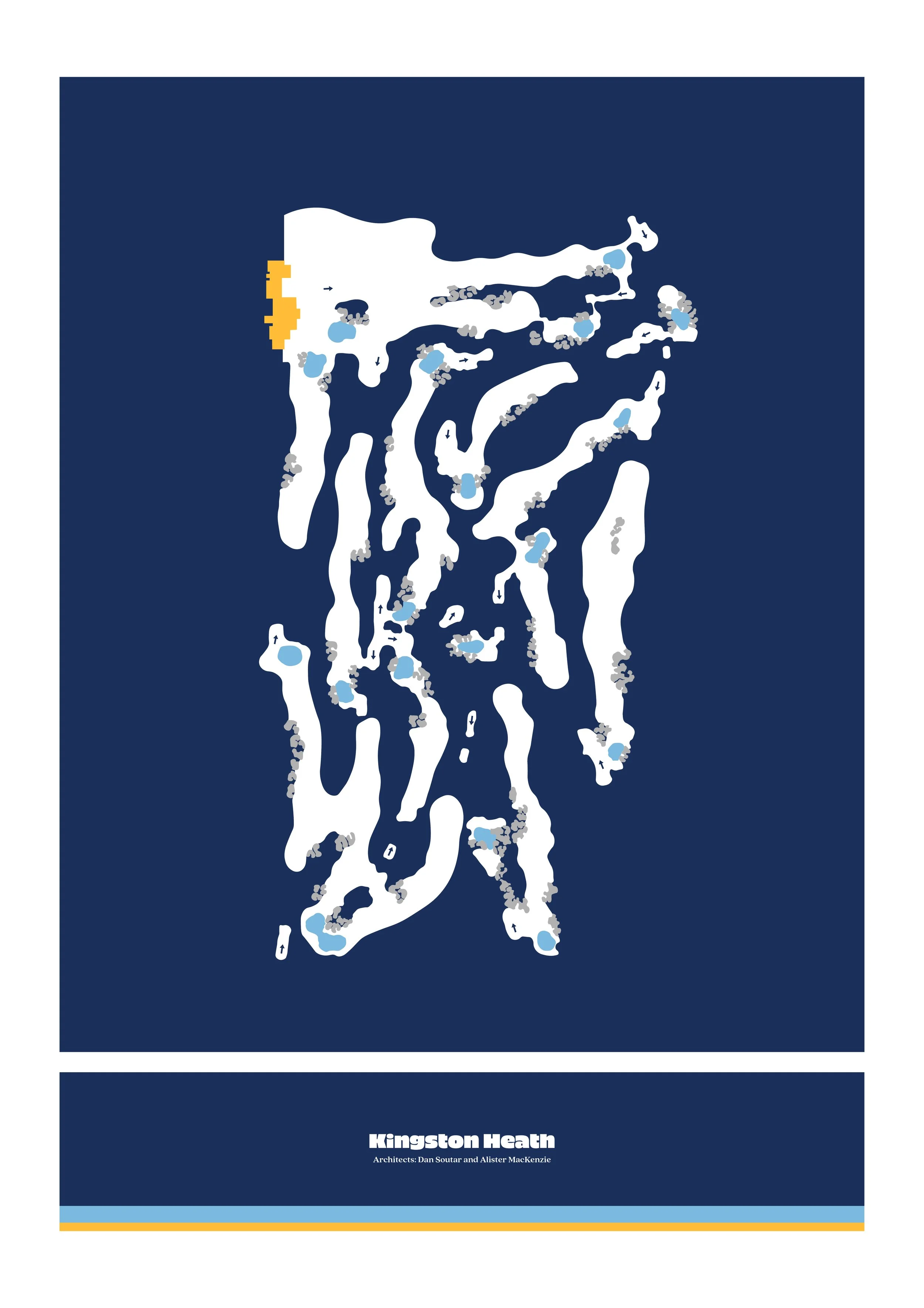
Kingston Heath’s routing uses the whole carcass
And then there is the Old Course at St Andrews. A place where the land has been used so completely that the course feels almost infinite. Fairways overlap. Holes share corridors. Golfers move across the same ground in several directions.
It does not feel indulgent.It feels efficient. The land is not hosting the golf. It has surrendered itself to it. This is where the chicken carcass comes in.
A competent chef can carve a chicken into beautiful pieces. Breast here. Thigh there. Each portion plated neatly on its own. But the best chefs use the entire carcass. The bones become broth. The scraps become something else entirely. One ingredient becomes several meals. Great golf land can work the same way.
Some courses carve beautiful portions out of spectacular landscapes. The ones I admire most feel like they have used the entire animal. Every fold of ground. Every corridor. Every slightly awkward piece of land that had to be solved rather than admired. Nothing wasted.
Standing here in the smell of diesel and damp earth, working inside a small corner of a golf course that just needs a bit of care, that idea keeps returning. How much golf can a piece of land truly hold? How much of it can be used? And perhaps the better question is simply this. Do we prefer courses that borrow spectacular landscapes for golf? Or the ones that surrender the entire landscape to the game?
Happy Golfing